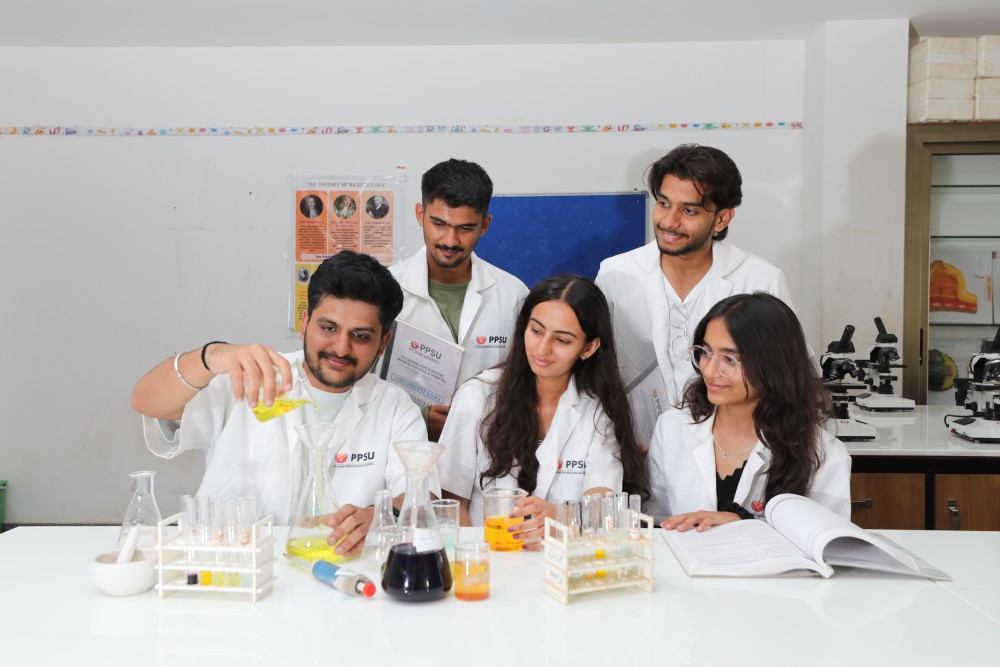
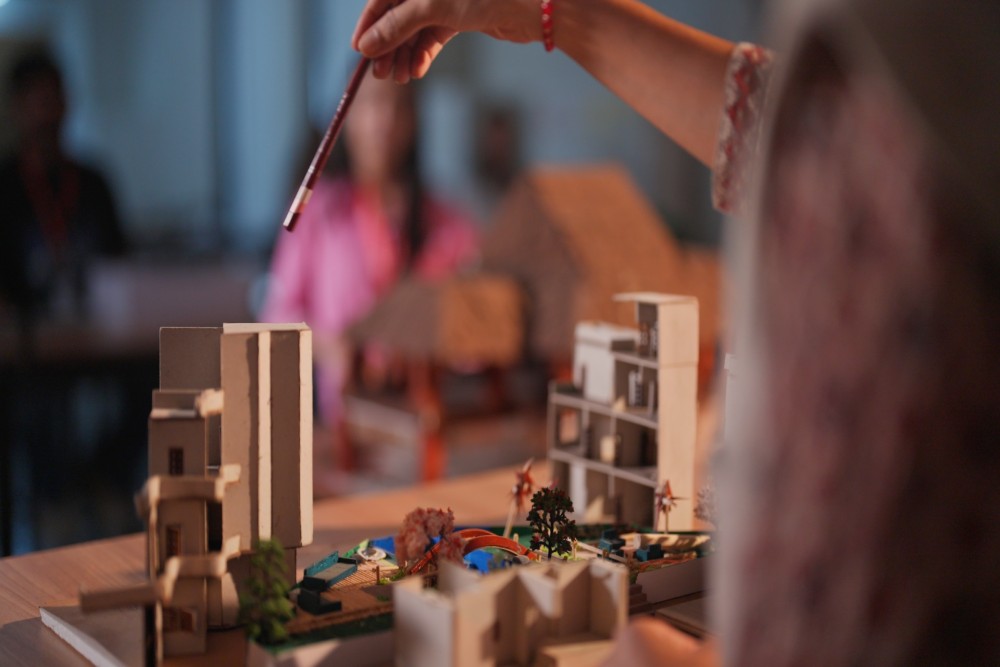
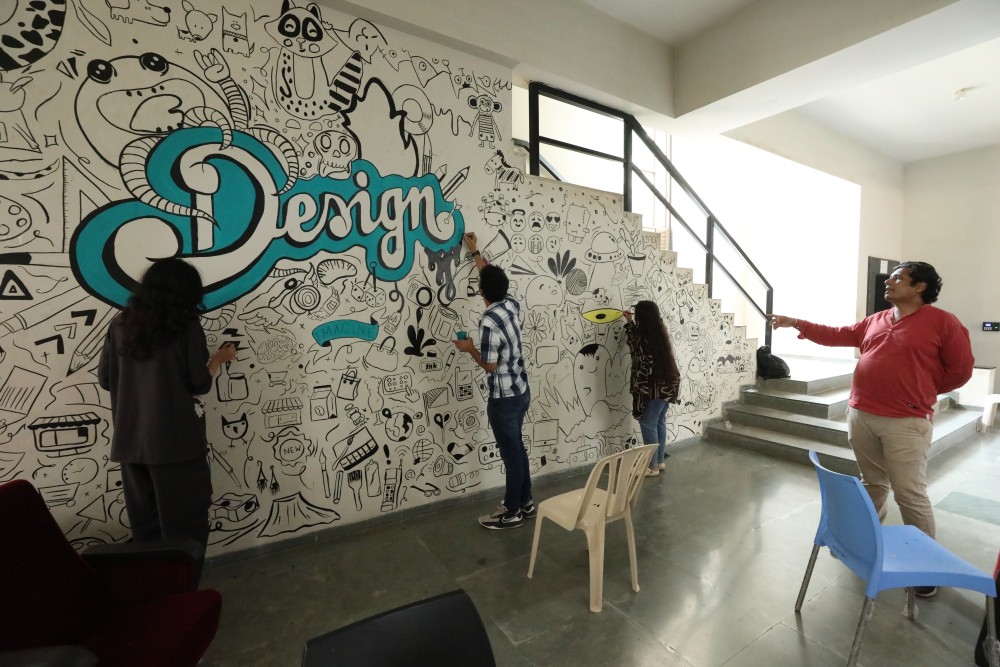
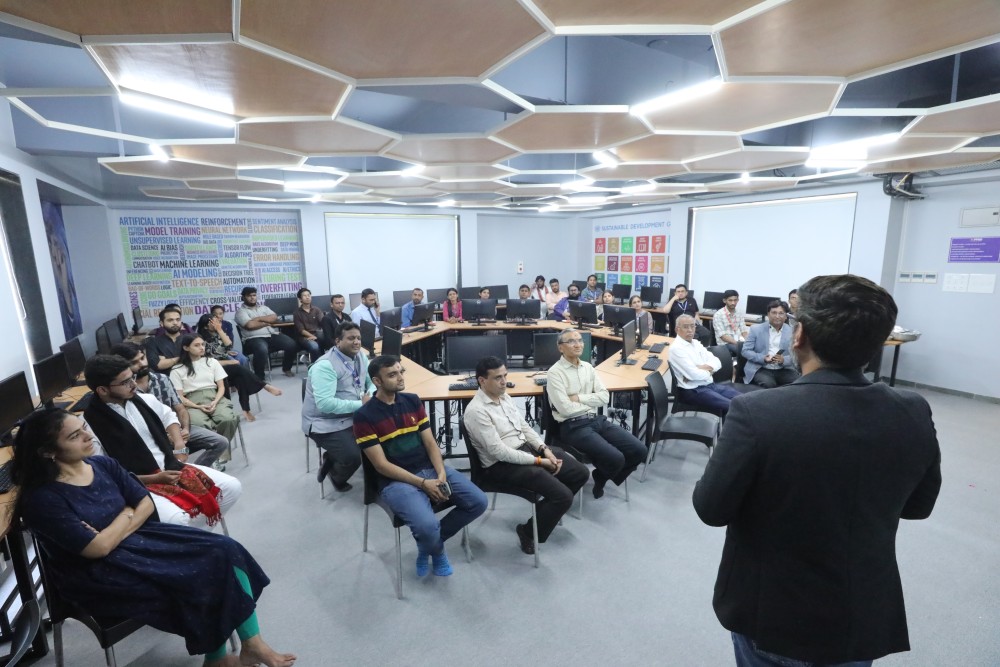
Industry-Aligned Curriculum
Programs designed in consultation with industry experts to meet current market demands.
Multidisciplinary education combining business, commerce, humanities, analytics, aviation, hospitality, tourism and research.
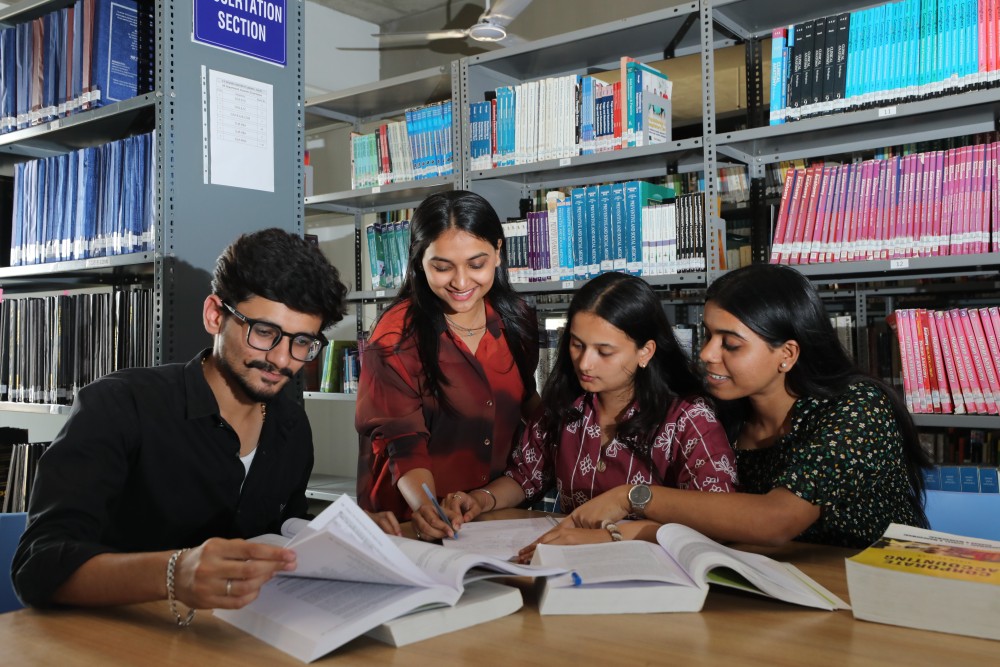
The School of Liberal Arts and Management Studies at P P Savani University offers multidisciplinary education that combines business, commerce, humanities, analytics, aviation, hospitality, tourism, and research. Through academic excellence, industry integration, and experiential learning, students develop the skills, knowledge, and leadership mindset needed to excel in a dynamic global environment.
Programs designed in consultation with industry experts to meet current market demands.
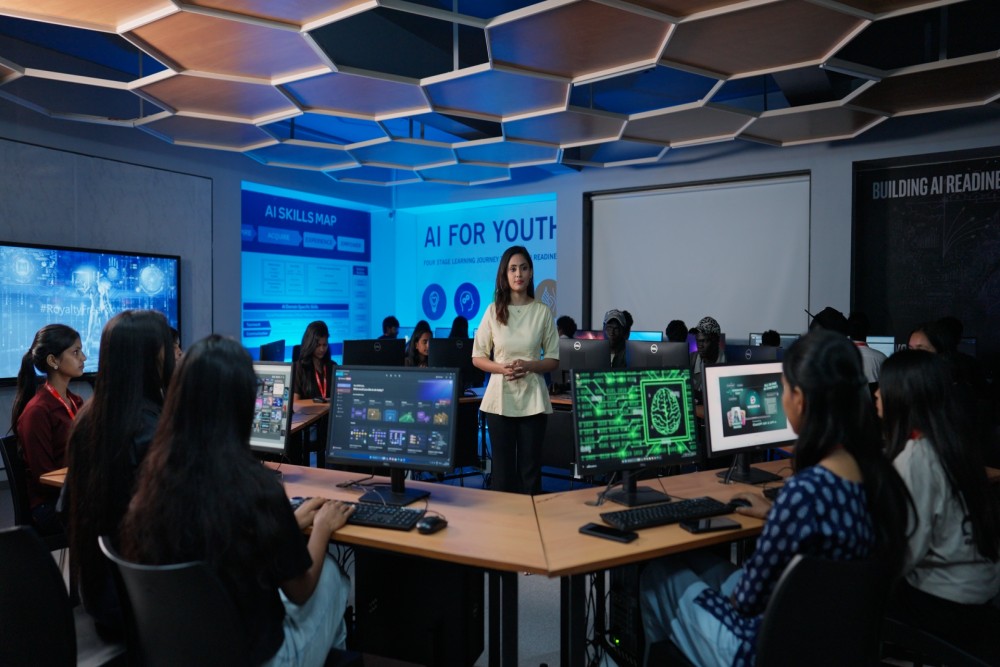
Case studies, simulations, internships, projects, workshops, and industry interactions.
Exposure to management, commerce, humanities, analytics, aviation, hospitality, and tourism.
Learn from academicians, researchers, industry experts, consultants, and mentors.
Communication, leadership, critical thinking, analytical reasoning, and professional ethics.
Aptitude preparation, interview readiness, resume building, and soft skills enhancement.
Industry certifications, workshops, guest lectures, and international perspectives.
Guidance for innovation, startup development, and entrepreneurial ventures.
Elevate your career with our latest advanced specialized programs.
Your Success Jourmey Starts Here.
| Semester I | |||
|---|---|---|---|
| Sr. No. | Quadrimester | Paper | Credits |
| 1 | A | Linguistic Proficiency | 2 |
| 2 | Mind & Behaviour | 2 | |
| 3 | Computer and Digital Literacy | 2 | |

| 4 | Critical Thinking and Reasoning | 2 | |

| 5 | Foreign Language | 3 | |
| 6 | Indian Civilization | 2 | |
| 7 | Mathematical Ability | 2 | |
| 8 | Fine and Performing Arts – Instrumental / Vocal | 2 | |
| Total academic credits at the end of the Quadrimester | 17 | ||
| 9 | B | Public Speaking & Debating Skills | 2 |
| 10 | Essentials of Entrepreneurship | 2 | |
| 11 | Ethics | 2 | |
| 12 | Principles of Science and Scientific Temper | 2 | |
| 13 | World Civilization | 2 | |
| 14 | History of Ideas | 2 | |
| 15 | Essentials of Environment | 2 | |
| 16 | Gender Studies (Workshop mode) | 2 | |
| Total academic credits at the end of the Quadrimester | 16 | ||
| Total academic credits at the end of the Semester | 33 | ||
| Semester II | |||
|---|---|---|---|
| Sr. No. | Quadrimester | Paper | Credits |
| 1 | C | Global Communication Skills | 2 |
| 2 | Creativity and Technology | 2 | |
| 3 | Wealth Creation and Management | 2 | |
| 4 | Foreign Language | 3 | |
| 5 | Social and Political Formations | 2 | |
| 6 | Peace and Conflict Studies | 2 | |
| 7 | Introduction to Psychology | 2 | |
| 8 | Fine and Performing Arts – Dramatics OR Photography | 2 | |
| Total academic credits at the end of the Quadrimester | 17 | ||
| 9 | D | Effective Writing | 2 |
| 10 | Introduction to Politics and Policy | 2 | |
| 11 | Introduction to Economics | 2 | |
| 12 | Introduction to English | 2 | |
| 13 | Introduction to Mass Communication | 2 | |
| 14 | Introduction to International Relations | 2 | |
| 15 | Introduction to Sociology | 2 | |
| 16 | Introduction to History | 2 | |
| Total academic credits at the end of the Quadrimester | 16 | ||
| Total academic credits at the end of the Semester | 33 | ||
| Semester III | |||
|---|---|---|---|
| Sr. No. | Paper | Credits | |
| 1 | Major 1 | (core of the Major) | 3 |
| 2 | Major 2 | 3 | |
| 3 | Major 3 | 3 | |
| 4 | Major 4 | 3 | |
| 5 | Major 5 | 3 | |
| 6 | Major 6 | 3 | |
| 7 | Major 7 | 3 | |
| 8 | Minor 1 | 3 | |
| 9 | Minor 2 | 3 | |
| Total academic credits at the end of the Semester | 27 | ||
| Semester IV | |||
|---|---|---|---|
| Sr. No. | Paper | Credits | |
| 1 | Major 8 | (core of the Major) | 3 |
| 2 | Major 9 | 3 | |
| 3 | Major 10 | (introduction pertaining to the internal Specialisation) | 3 |
| 4 | Major 11 | 3 | |
| 5 | Major 12 | 3 | |
| 6 | Major 13 | 3 | |
| 7 | Major 14 | 3 | |
| 8 | Minor 3 | 3 | |
| 9 | Minor 4 | 3 | |
| Total academic credits at the end of the Semester | 27 | ||
| Semester V | |||
|---|---|---|---|
| Sr. No. | Paper | Credits | |
| 1 | Major 15 | (introduction pertaining to the internal Specialisation) | 3 |
| 2 | Major 16 | 3 | |
| 3 | Major 17 | 3 | |
| 4 | Major 18 | (electives pertaining to the internal Specialisation) | 3 |
| 5 | Major 19 | 3 | |
| 6 | Minor 5 | 3 | |
| 7 | Minor 6 | 3 | |
| 8 | Open Elective 1 or MOOC | 3 | |
| 9 | Open Elective 2 or MOOC | 3 | |
| Total academic credits at the end of the Semester | 27 | ||
| Semester VI | |||
|---|---|---|---|
| Sr. No. | Paper | Credits | |
| 1 | Major 20 | (introduction pertaining to the internal Specialisation) | 3 |
| 2 | Major 21 | 3 | |
| 3 | Major 22 | 3 | |
| 4 | Major 23 | (electives pertaining to the internal Specialisation) | 3 |
| 5 | Major 24 | 3 | |
| 6 | Minor 7 | 3 | |
| 7 | Minor 8 | 3 | |
| 8 | Open Elective 3 or MOOC | 3 | |
| 9 | Open Elective 4 or MOOC | 3 | |
| Total academic credits at the end of the Semester | 27 | ||
| Semester VII | |||
|---|---|---|---|
| Sr. No. | Paper | Credits | |
| TEACHING | |||
| 1 | Quantitative Method | 4 | |
| 2 | Qualitative Method | 4 | |
| SELF LEARNING | |||
| 3 | paper 1 | specifically selected and designed from the list of interdisciplinary papers and or with combination of major & minor | 4 |
| 4 | paper 2 | 4 | |
| 5 | paper 3 | 4 | |
| RESEARCH PROPOSAL (20 Credits) | |||
| 6 |
• Allocation of dissertation mentor • Finalisation of the proposal • Preparation for data collection | 5 | |
| Total academic credits at the end of the Semester | 25 | ||
| Semester VIII | ||
|---|---|---|
| Sr. No. | Paper | Credits |
| RESEARCH DISSERTATION | ||
| 1 | Compilation & analysis of data | 5 |
| 2 | Writing the dissertation and submission | 5 |
| 3 | Defence | 5 |
| Total academic credits at the end of the Semester | 15 | |
| Colour Legends | |
|---|---|
| From SEPD | |
| Introduced in a Semester, BUT to be offered for the whole Semester, with 3 credits (of 16 weeks) – Assessment at the end of the Semester | |
| To be offered in a particular Quadrimester (8 weeks) – Liberal Arts Courses | |
| Details of the Credits | ||
|---|---|---|
| 1 | Academic Credits | 182 |
| 2 | Research Credits | 20 |
| 3 | Experiential Learning | 30 |
| Total credits at the end of the Programme | 232 | |
| Sr. No. | SEMESTER I | Credit |
|---|---|---|
| 1 | Foundation Course | 2 |
| 2 | Foundation Course | 2 |
| 3 | Foundation Course | 3 |
| 4 | Core 1 | 4 |
| 5 | Core 2 | 3 |
| 6 | Core 3 | 3 |
| 7 | Core 4 | 3 |
| Total Credits at the end of the Semester | 20 | |
| Sr. No. | SEMESTER II | Credit |
|---|---|---|
| 8 | Foundation Course | 2 |
| 9 | Foundation Course | 2 |
| 10 | Foundation Course | 3 |
| 11 | Core 1 | 4 |
| 12 | Core 2 | 3 |
| 13 | Core 3 | 3 |
| 14 | Core 4 | 3 |
| 15 | Exploration of Entrepreneurial Idea (10 Days) | 2 |
| Total Credits at the end of the Semester | 22 | |
| Sr. No. | SEMESTER III | Credit |
|---|---|---|
| 16 | Foundation Course | 2 |
| 17 | Foundation Course | 2 |
| 18 | Core 1 | 3 |
| 19 | Core 2 | 3 |
| 20 | Core 3 | 3 |
| 21 | Core 4 | 3 |
| 22 | Core 5 | 3 |
| 23 | Core 6 | 3 |
| Total Credits at the end of the Semester | 22 | |
| Sr. No. | SEMESTER IV | Credit |
|---|---|---|
| 24 | Foundation Course | 2 |
| 25 | Foundation Course | 2 |
| 26 | Core 1 | 3 |
| 27 | Core 2 | 3 |
| 28 | Core 3 | 3 |
| 29 | Core 4 | 3 |
| 30 | Core 5 | 3 |
| 31 | Core 6 | 3 |
| 32 | SIP | 6 |
| Total Credits at the end of the Semester | 26 | |
| Sr. No. | SEMESTER V | Credit |
|---|---|---|
| 33 | Capstone Course | 3 |
| 34 | Capstone Course | 3 |
| 35 | Major 1 | 3 |
| 36 | Major 2 | 3 |
| 37 | Major 3 | 3 |
| 38 | Major 1 (interdisciplinary papers) | 3 |
| 39 | Major 2 (interdisciplinary papers) | 3 |
| Total Credits at the end of the Semester | 21 | |
| Sr. No. | SEMESTER VI | Credit |
|---|---|---|
| 40 | Capstone Course | 3 |
| 41 | Capstone Course | 3 |
| 42 | Major 1 | 3 |
| 43 | Major 2 | 3 |
| 44 | Major 3 | 3 |
| 45 | Major 1 (interdisciplinary papers) | 3 |
| 46 | Major 2 (interdisciplinary papers) | 3 |
| 47 | Winter | 6 |
| Total Credits at the end of the Semester | 27 | |
| * | SEMESTER VII | Credit 25 |
|---|
| * | SEMESTER VIII | Credit 15 |
|---|
| Total Credit | 180 | |
|---|---|---|
Note: *Semester 7 and 8 would follow the same structure as the Liberal Arts programme.
A two-year full-time MBA programme at SLM provides a graduate with a dual specialisation and degree which can help increase the awareness of general business knowledge and enhance understanding in any particular business domain. An MBA at the SLM - PPSU helps the graduate to become more marketable across a wider range of work profiles and across countries, move upwards in a company into managerial cadre, develop an extensive professional network or even set up one’s own business. Following are the salient features of MBA at the SLM - PPSU:
This is a specialised dual specialisation management programme where aspirants can get MBA degree with specialization area(s) of concentration like:
It is delivered in semester (half yearly) system basis, with two semesters in one academic year, and a total of four semesters during the two-year programme.
Additionally, every student has to undergo Summer Internship at the end of the 2nd semester.
The programme has a set of Core courses and Electives from the functional areas.
The programme has been designed to bring all perspectives important for any business in general as a common thread. For example, perspectives like globalisation, strategy, technology etc. appear as a common thread through the programme.
The School offers a wide range of courses through vertical specialisations and foundation courses. To facilitate this process the undergraduate degrees with internal specialisations are offered under these six Centres.
| Sr. No. | Center | Degree | Specialisation |
|---|---|---|---|
| 1 | Centre for Humanities | B.A. (Hons.) – English | English as Second Language Studies |
| Cultural Studies | |||
| Language and Society | |||
| South Asian Literature | |||
| Linguistics and Phonetics | |||
| English Language Teaching | |||
| B.A. (Hons.) – Hindi | Sahitya, Siddhanta and Samalochna | ||
| Bhasha Vigyan aur Hindi Bhasha | |||
| B.A. (Hons.) – Philosophy | Philosophy of Mind | ||
| Religion and Metaphysics | |||

| Philosophy and Literature | |||
| Philosophy and Aesthetics | |||
| Science and Religion | |||
| B.A. (Hons.) – Fine Arts | Art: History & Culture | ||
| Multimedia Arts | |||
| Pottery and Ceramics | |||
| Photography | |||
| B.A. (Hons.) – Performing Arts | Classical Vocal (Shastriya Sangeet) | ||
| Light Classical (Sugam Sangeet) | |||
| Classical Dance (Kathak or Bharatnatyam) | |||
| Theatre | |||
| 2 | Centre for Mass Communication | B.A. (Hons.) – Mass Communication | Journalism |
| Digital Media | |||
| Film Studies | |||
| Advertisement and Personnel Relations | |||
| 3 | Centre for Behavioral Studies | B. H. (Hons.) – Psychology | Clinical Psychology |
| Social Psychology | |||
| Sports Psychology | |||
| Organizational Psychology | |||
| 4 | Centre for Economics and Regional Development | B.A. (Hons.) – Economics | Environmental Economics |
| Developmental Economics | |||
| Behavioral Economics | |||
| B.A. (Hons.) – Regional Development | Population | ||
| Planning | |||
| 5 | Centre for Social Sciences | B.A. (Hons.) – Politics and Policy | Political Studies |
| Public Policy and Administration | |||
| B.A. (Hons.) – History | Public History | ||
| World History | |||
| B.A. (Hons.) – Sociology | Development Sociology – Education and Health | ||
| Organizational Sociology | |||
| B.A. (Hons.) – International Relations | South Asia | ||
| South East Asia | |||
| Security – Food, Energy, Natural Resources | |||
| 6 | Centre for Management and Commerce Studies | BBA (Hons.) | Entrepreneurship |
| Family Business | |||
| Marketing | |||
| Human Resource | |||
| Finance | |||
| B.Com (Hons.) | Wealth Management | ||
| Computerised Accounting |
A Liberal Arts education is based on the idea of acquiring knowledge and understanding worthy of a free, active and engaged global citizen.
At the School of Liberal Arts and Management Studies (SLM), P. P. Savani University, we’ve imagined what a Liberal Arts education means for the 21st century; driven by the core values of critical thinking and the acquisition of adaptable expertise. In this unique system, the students will study a variety of disciplines in the nature of Foundation and Core specialisations. You will learn through problem-solving, by examining issues from multiple disciplinary perspectives.
| The Foundation Courses would be designed to be introductory and exploratory in nature. These would include |
• Academic Writing • Critical Reasoning • Public Speaking and Debate • IT Literacy • Ethics and Environmental Studies |
| From the domain of Social Science |
• Sociology • Economics • Psychology • Political Science • International Relations • Public Policy • Ethics and Environmental Studies • History |
| From the domain of Humanities |
• English Literature • Culture Studies • Mass Communication • Philosophy • Journalism • Theory-based courses in Theatre and Music • Academic Writing • Critical Reasoning • Public Speaking and Debate |
| The Physical and Natural Science domain would comprise courses in |
• Mathematical Reasoning • Principles of Science • Statistics |
| From the domain of Physical and Natural Science |
• Mathematical Reasoning • Principles of Science • Statistics • IT Literacy |
| From the domain of Fine and Performing Arts |
• Visual Art • Design • Sculpture • Theatre, Dance and Music |
| From the domain of Global Studies |
• German, French, Spanish • Indian and the World Civilisation • Social and Political Formations • Great Books, Mind and Behaviour • Creativity and Technology |
| From the domain of Management and Commerce |
• Entrepreneurship • Wealth Creation & Management • History of Family Business • Finance, Marketing, HR • International Financial Management • Supply Chain Management |
At the School of Liberal Arts and Management Studies, learning extends beyond textbooks through industry collaboration.
PP Savani Management School offers industry-focused internship and placement opportunities that help students gain real-world business experience. Through strong corporate partnerships, students receive exposure to leading organizations, live projects, skill development programs, career mentoring, and recruitment drives, preparing them for successful careers in management and business leadership.
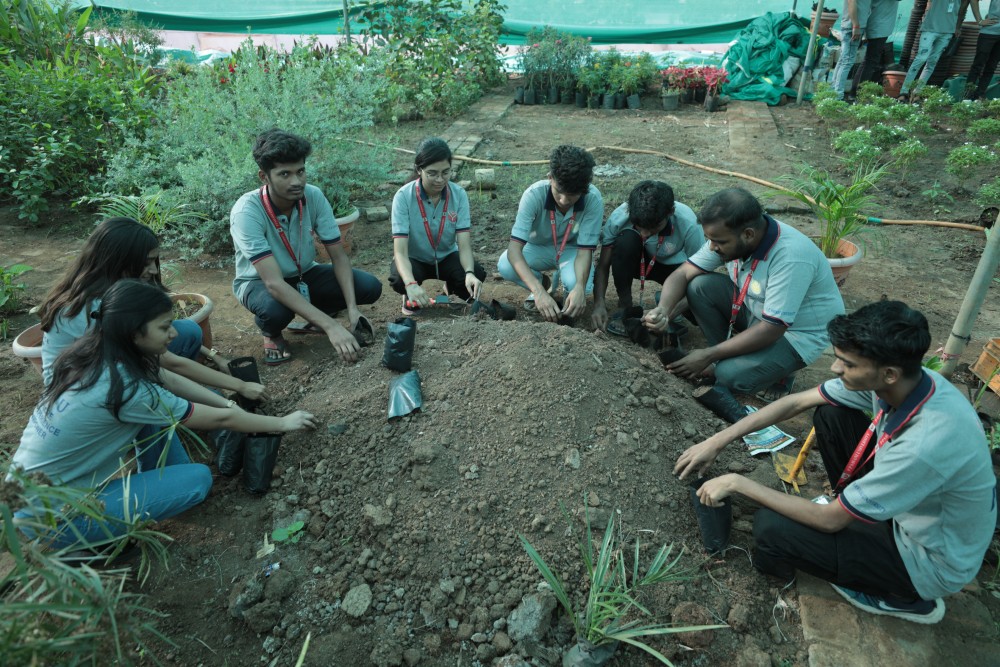
A glimpse into the everyday energy of campus life at the School of Liberal Arts and Management Studies.
A small glimpse of the recruiters our students join.


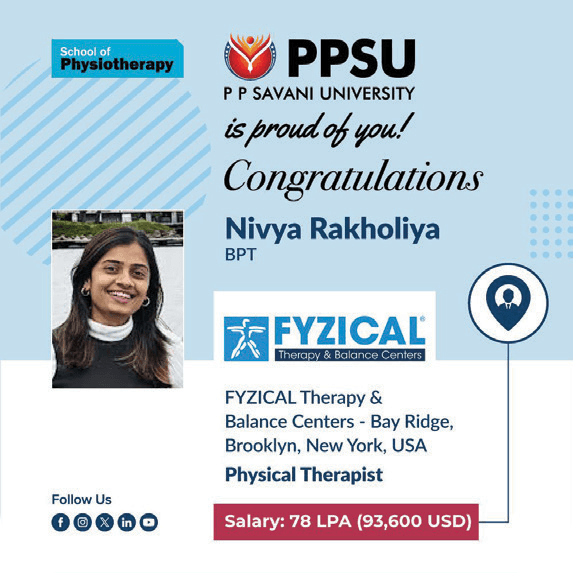
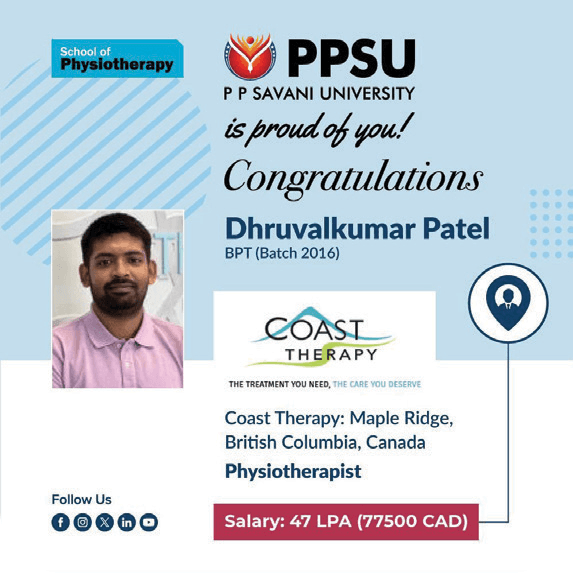
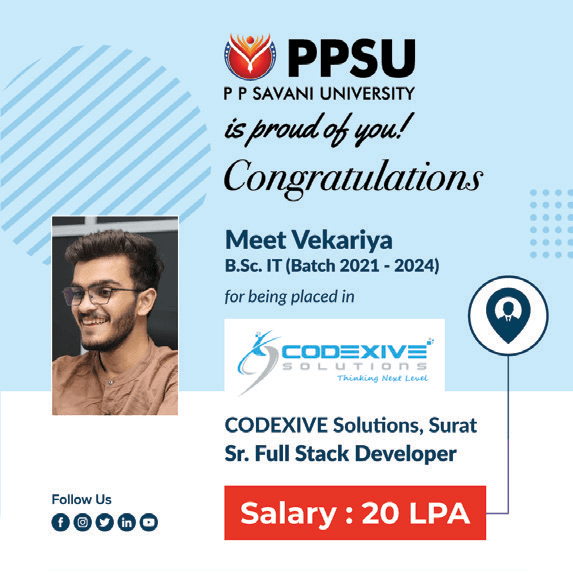
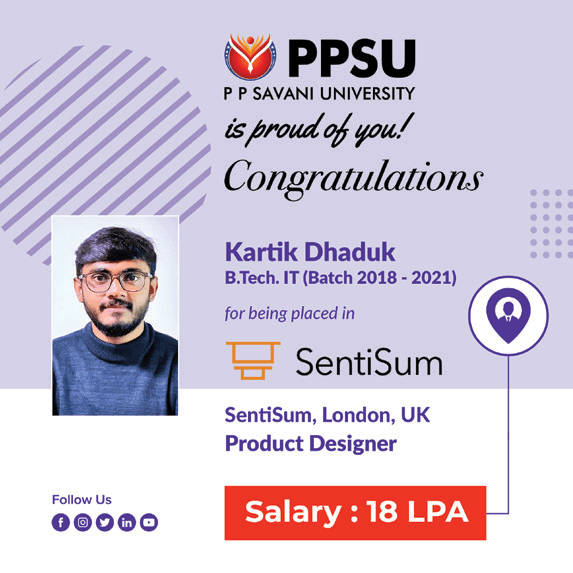
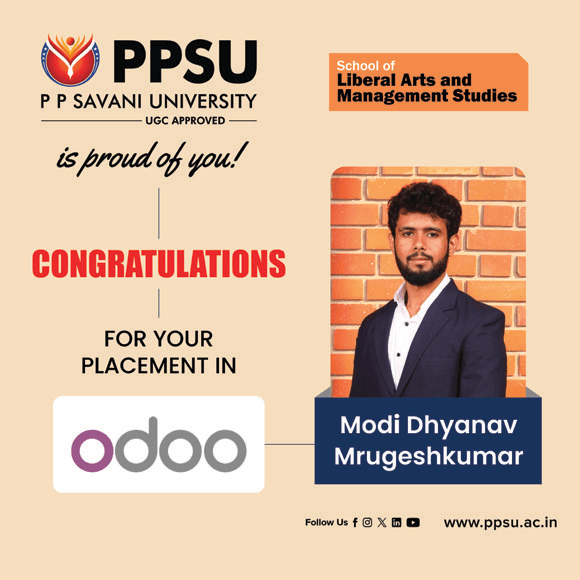
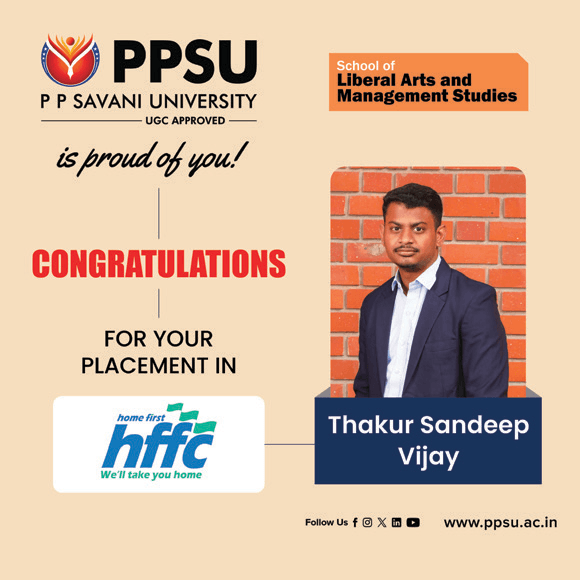
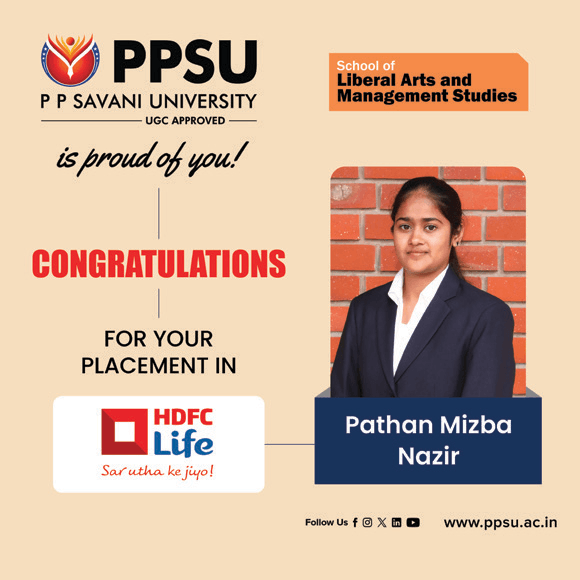
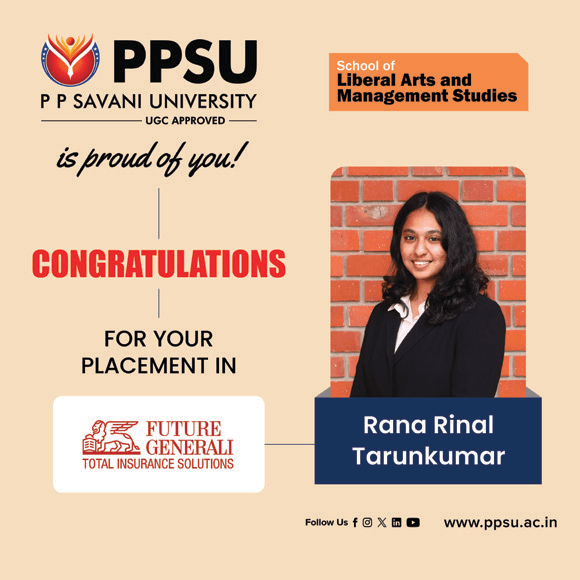
Meet a few of our recent achievers landing roles at top employers worldwide.
Join thousands of students who’ve built rewarding careers at the world’s top recruiters.


& 1,000+ more companies across IT, banking, manufacturing, pharma, automotive and consulting.
Real stories from students who are building their futures at PPSU
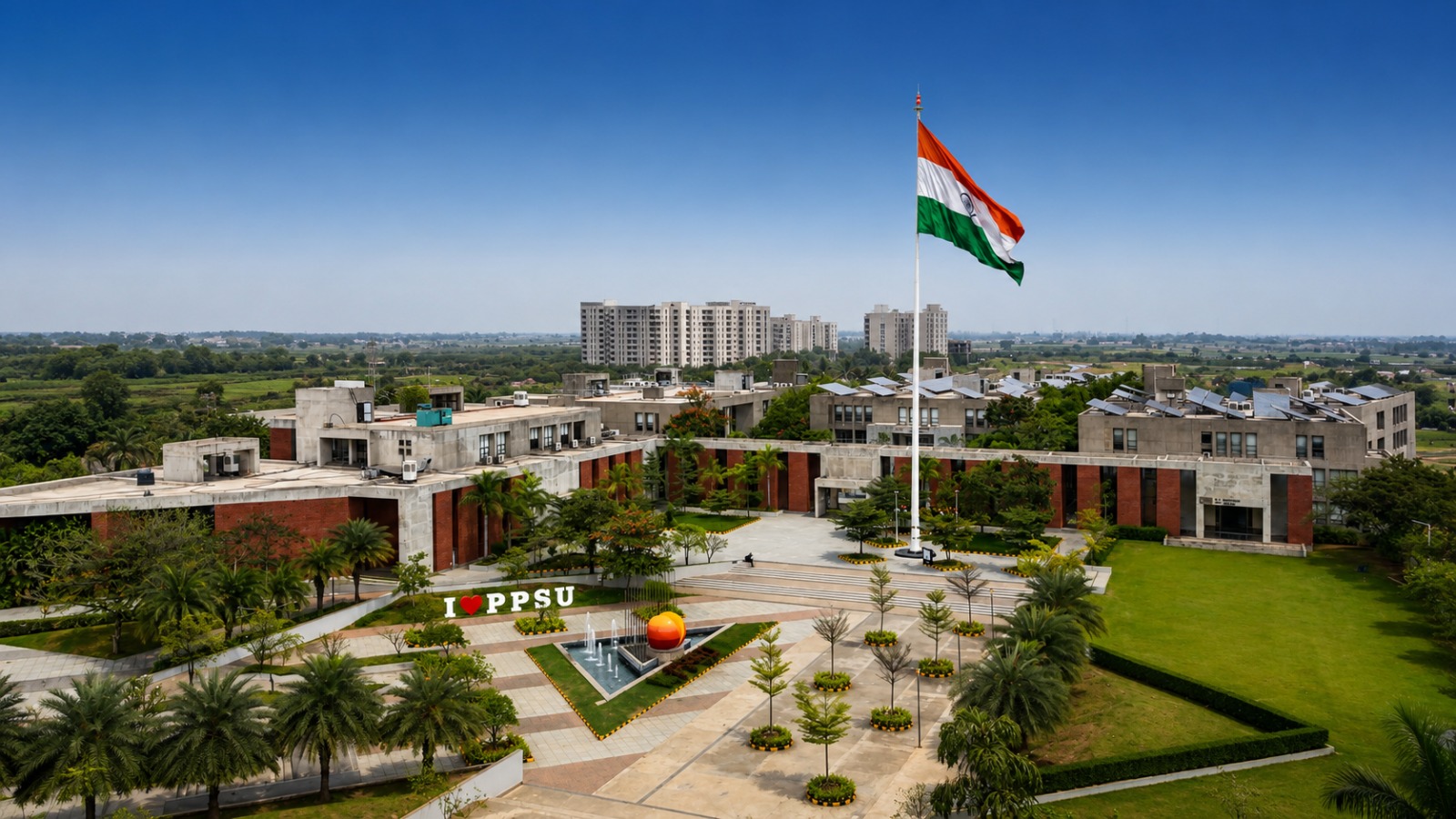
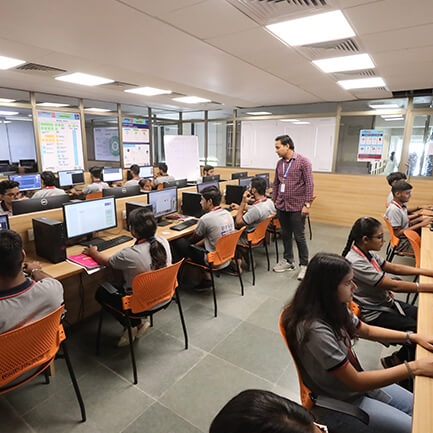
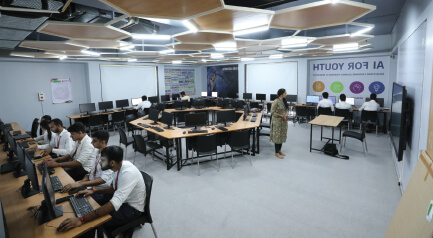
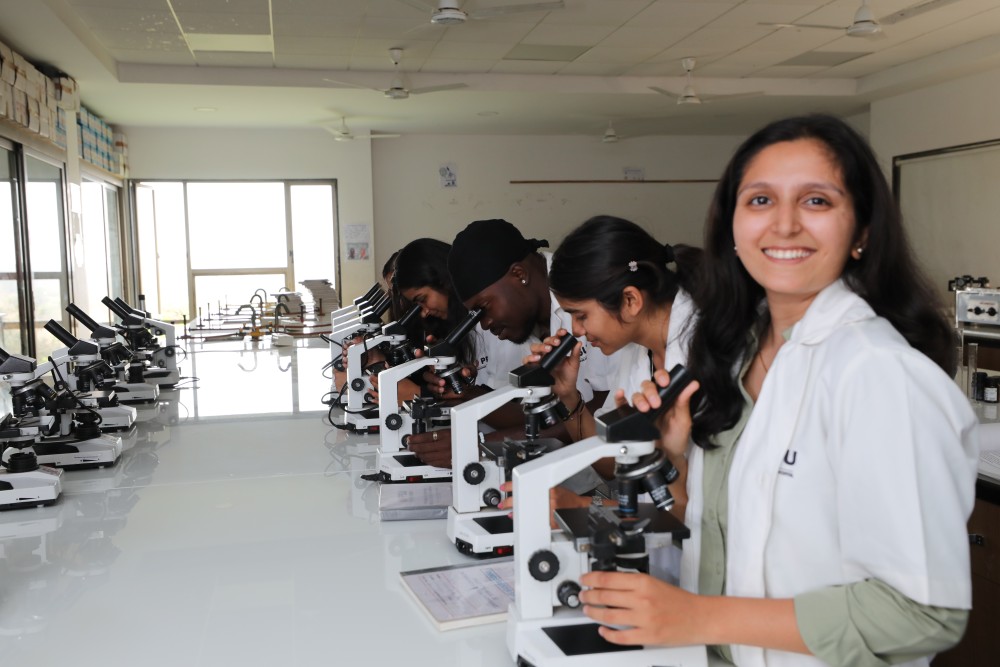
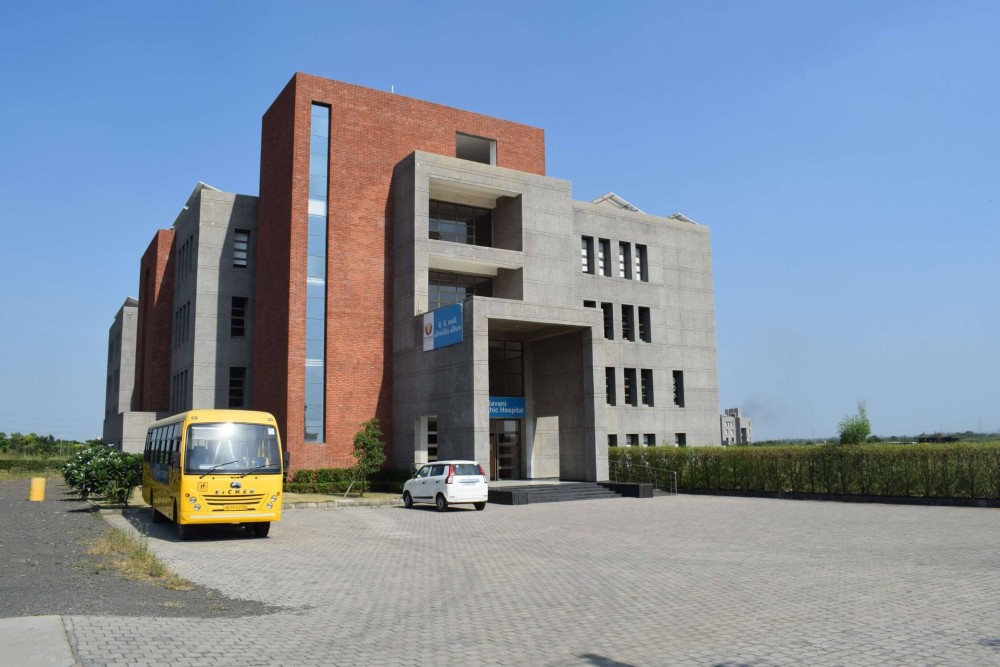
P P Savani University offers excellent academic and residential facilities that make up a vibrant campus — modern academic blocks, hostels, labs and expansive sports grounds.
State-of-the-Art Campus Infrastructure
Stay connected with what’s happening on campus — from upcoming events to fresh stories from our community.
article
Blog
10
Sep
New campus. New squad. New adventures. And one epic beginning! 🎉 Stepping into university for the first time is a…
Read More arrow_forward
article
Blog
29
Aug
For many students, studying abroad is more than an academic decision—it is an opportunity to experience a new culture, gain…
Read More arrow_forward
article
Blog
28
Aug
P P Savani University proudly hosted a soulful SPIC MACAY recital at the PIC MACAY PPSU Chapter, bringing students…
Read More arrow_forwardStrategic academic partnerships across continents — bringing the world to PPSU and PPSU to the world.
GENEVA Information Technology Institute
The Higher Education Institution of the Province of Liege
Danish Consortium for Academic Craftsmanship University
North American University
VUZF University
FPT University
The University of Nairobi
KCA University, Nairobi
University of Tuzla
International Information Technology University
UPSA — Universidad Pontificia de Salamanca